

Tip Income and Taxes – How to Get it Right
For those who work in the service industry, tips are vital for their income. The tax rules and your obligations for tipped income require complying with a unique set of tax rules.
Failure to do so can cost you your hard-earned money. Let’s take a closer look at what you need to know about tips and taxes.
When Do You Have to Report Tip Income?
If you make more than $20 per month in tips, that income is taxable. You’re responsible for paying income, Social Security, and Medicare tax on that tip money.
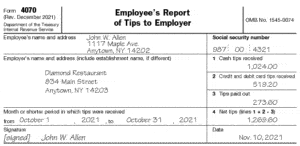
This includes cash tips, electronic tips, tips from tip pools, tip splitting, or tip-sharing arrangements.
You must report your tips to your employer monthly using Form 4070. All tips received must also be reported to the IRS on your tax return.
What Happens If You Don’t Accurately Report Your Tips?
If you fail to report all of your tips to your employer, the IRS can impose a penalty of 50% of the Medicare and Social Security tax you fail to pay.
They can also impose an Accuracy-Related Penalty. There are two types of penalties that fall under this category:
1. Negligence or Disregard of the Rules or Regulations Penalty
An example of this type of penalty would be not keeping adequate records. The penalty is 20% of the underreported income plus interest.
2. Substantial Understatement of Income Tax Penalty
This penalty applies if you understate your tax liability by 10% of the tax required to be shown on your tax return or $5,000, whichever is greater. The penalty is 20% of the understated tax plus interest.
Planning and Preparation
 Make sure that you keep accurate records. You should keep a daily log of your tip income.
The most important step you can take as a tipped employee is to prepare so that you will be able to pay the taxes you will owe.
The best course of action is to set aside income throughout the year. We recommend setting aside 15% of your income to cover your federal taxes and another 5% to cover state taxes.
If you don’t save money throughout the year, you may be unable to pay what you owe. Once you miss the payment deadline, IRS will begin charging penalties and interest.
The amount you owe can quickly spiral out of control. If you are still unable to pay, the IRS could garnish your wages, revoke your passport, or even take money from your bank account.
If you are in a situation where you owe taxes you cannot pay, don’t wait. Contact us today.