

IRS LETTER LT38
In 2020, due to COVID-19, the IRS began to suspend most of its collection enforcements and bank fund seizures. This courtesy was a form of COVID relief. Also, some automatic penalty relief was granted for 2019 and 2020 tax returns. Thank you, IRS.
But that suspension has ended. Now, the IRS is following up on a collection of all unpaid taxes. If you received the IRS Letter 38, this is your official notice that the IRS has resumed its collections against you.
I’ll say that again. IRS has resumed its collections. Against you.
Did You Receive IRS’s Letter LT38?
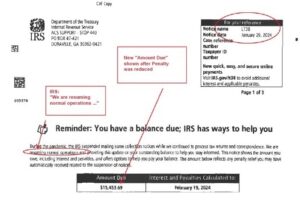
If you have received an IRS Letter LT38, pay close attention to this document. It tells you your new balance, after the penalty reduction.
The IRS gives clear instructions of what is required from you, to avoid levies on your bank accounts. If you’ve received a letter, this is what you do.
Act Promptly –
IRS recommends that you read the notice very carefully. Follow the instructions on your notice, especially regarding any tax liability.
File All Missing Tax Returns –
If your letter mentions that you have missing tax returns, you should file those tax returns as soon as possible. If you don’t file the tax returns, then the IRS will estimate your taxes for you. Those estimates created by the Internal Revenue Service usually result in more tax than if you file yourself.
Also, tax balances from these “Service-Filed-Returns” (or “SFRs”) cannot be discharged in Bankruptcy.
Arrange to Pay Balances –
The IRS suggests that you use its Online Portal to make payments. However, your situation might be more complicated. You may need to arrange for a payment plan or a settlement.
If you have unfiled tax returns, then the IRS will not allow you to arrange to pay any unpaid balance. In that case, you may already be subject to collection enforcement. The IRS could levy your bank account without further notice.
If your balance due is greater, than $25,000 for a business or greater than $50,000 for an individual, you will probably need representation. The local Revenue Officers and IRS Collection Telephone Reps will require much more documentation. Here is where tax lawyers find ways to make your situation much better.
Contact a trusted resolution lawyer, such as Tax Law Offices, Inc. to help you resolve the balances. Again, with this IRS Letter 38, this may be your last IRS Notice before those collection enforcement liens occur.
Remember, always act. Never wait. Because you may not get further notice before the IRS zaps your bank account with levy enforcement.