

How to Avoid the Top 3 Cryptocurrency Tax Traps
Lately, a lot of focus is on investment transactions in various cryptocurrencies. So now the IRS is watching – maybe even closer than you think.
Let’s talk about how to avoid the top 3 cryptocurrency tax traps.
TRAP #1
You have to know what a taxable cryptocurrency transaction is and how to report it properly. Not every transaction is hidden. But also, not every sale, trade, exchange is taxable.
Here are the taxable ones. If you:
- Mine or stake crypto
- Receive token airdrops
- Sell cryptocurrency for cash
- Trade crypto for something, including other cryptocurrencies
- Use crypto to pay for something
- Accept crypto as payment
If one of those events occurred, your cryptocurrency transaction might have resulted in a gain or loss. The IRS wants you to report the gains as required. (Obviously.)
But some people are better, or more diligent than others, at reporting. Some who report it wrong, or not at all, can be punished in multiple ways. But that’s not the point.
Trap #1 – You will choose whether you lawfully report your gains and losses. BEFORE you make that choice, first find out whether you had taxable transactions and when. And how much.
So if you trade in cryptocurrency, at least do this. Hire a real accountant to help with tracking your crypto gains and losses.
TRAP #2
Have you wondered what the government knows or gets to see about your transactions? There are three main sources of information the government gets:
1. Voluntarily provided data.
This is the information that you share on your tax returns.
2. Data that becomes available via IRS summonses or brokers.
This is especially troublesome because you will never know when your broker shared information with the IRS. But when they do, the broker shares everything, including everything about your crypto activities.
3. Data that is submitted by Form 1099B.
This Form 1099 data is the IRS’s most desired form of crypto transaction information because it is convenient to the government. This data is electronically submitted and can be analyzed again and again.
Not all brokers are issuing 1099 Forms for crypto transactions yet. But by 2024,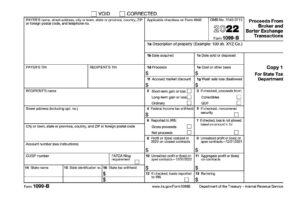 all US-based brokers will be. This will be, by far, the IRS’s primary source of information about your crypto transactions.
Why do we care? Not everyone receives all of their Forms 1099. Some of the forms may not reach you for whatever reason. But remember that this information is submitted to IRS electronically. That means you can always verify what was sent to the IRS.
Do this: Call IRS and ask for a Wage & Income transcript. This will help you accurately report your activity because you can see exactly what was reported on the Forms 1099. This will help your reporting to be more complete.
Having an IRS transcript will help you avoid incomplete reporting.
Trap #2 – Avoid flying blind. See most of what IRS sees. Request a Wage & Income Transcript to help ensure completeness. Avoid getting an Underreporter Audit. Verify this way with a transcript.
TRAP #3
What if you discover that your tax return only partially reported your cryptocurrency gains and losses? Do you change your tax return? Do you say nothing? I can’t answer that question for you here.
In these cases, the government is looking for Voluntary Disclosure of the unreported data. And there are options for how a person makes that Voluntary Disclosure.
This is especially important if you have cryptocurrency accounts outside of the United States. If you didn’t disclose those accounts on your FBAR Form, and you get caught, the penalty is steep.
Everyone knows that you could get audited because you filed an incorrect tax return. The IRS could have additional information reported by Summons or some other source.
Many people are inclined to explain an incorrect tax return. Some may even make further false statements about their already false tax returns. And some will say nothing. No matter what you do, at that point, you are already in Trap #3.
Trap #3 – If you need to make a Voluntary Disclosure BEFORE you’re audited, ask for a tax lawyer’s help.
Before you represent yourself in an audit, stop. Your unfiltered, untrained responses could create further legal problems. Hire a tax lawyer to speak for you, because more than money is at stake.
To schedule a free strategy session, click here.
See our reputation with the BETTER BUSINESS BUREAU.
See our reviews on our GOOGLE BUSINESS page.