

Top 3 Tax Tips for Gig Economy Workers
If you work for yourself, this is a must-read!
The gig economy continues to grow with no signs of slowing down. In addition, companies like Uber and DoorDash have made it even easier for people to make money outside of traditional employment.
However, those working in the gig economy may not be aware that their taxes just got much more complicated.
Whatever the source of your gig economy income is, you have an obligation to file tax returns and pay taxes once your income exceeds a certain amount.
Who are Gig Workers, and What is the Gig Economy?
The general definition of gig economy is a labor market where gig work, freelance work, and independent contractors are common. The traditional form of work – full-time and permanent – is not a part of the gig economy.
Gig economy workers can be known as gig workers, freelancers, or independent contractors.
Below are some common examples:
- Musicians
- Ride-share drivers
- Personal trainers
- Photographers
- Truckers
- Graphic Designers
- Artists
- Realtors
Tax Basics for Gig Workers
With traditional employment, you are mailed a Form W-2 showing how much you earned the previous year and what was withheld in taxes. As a gig worker, you will receive tax Forms 1099 showing how much a company paid you.
Even if you don’t get these 1099 forms, you still have to fill out a tax return and report income above $400.
You will also owe self-employment tax. Traditional employees typically pay a portion of their income to Social Security taxes and a portion to Medicare while their employers pay an equal amount. As a gig worker, you will have to pay both halves.
Tax Tip #1 – Keep Good Records
Track all of your income. Save all payment receipts. Remember that income now includes any payments you receive through 3rd party payment applications like Venmo or CashApp that total over $600.
You should also keep track of all business expenses. For example, track your car’s business mileage, fuel, etc. Don’t forget items like cell phone usage and advertising expenses. These may be deductible at tax time.
The IRS looks heavily at deductions during audits. The IRS may view your deductions as non-business, personal expenses.
In that situation, it’s important to have good records proving your expenses were business-related.
Tax Tip #2 – Make Estimated Quarterly Payments
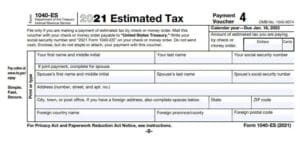
If you expect to owe $1,000 in taxes or more, you should make estimated payments to the IRS on a quarterly basis.
The quarterly tax payment is based on an estimation of your income for the current year.
Estimated tax payments are due four times in a tax year. Typically, the due dates are April 15, June 15, September 15 of the current year, and January 15 of the following year.
Not paying quarterly estimated payments can cause you to end up with a tax bill larger than you can pay.
When that happens, you can be hit with penalties and interest from the IRS, and if your tax bill is large enough, the IRS could end up filing a federal tax lien.
Tax Tip #3 – File Your Tax Return & File It On Time
Often gig workers don’t know they need to file tax returns. Or if they file, they file late. Both can lead to huge penalties, interest, and even tax liens.
Failing to file entirely can result in the IRS filing returns for you. When this happens, you almost always owe more than you should.
It can be tempting to put off filing when you can’t pay your taxes. But it’s better to file on time, even if you can’t pay right away.
The penalties for paying late are less than the penalties for not filing your return on time.
The IRS does offer installment payment plans. If you owe more than you can pay or have gotten behind on your payments, an experienced tax attorney can help.
To schedule a free strategy session, click here.
See our reputation with the BETTER BUSINESS BUREAU.
See our reviews on our GOOGLE BUSINESS page.